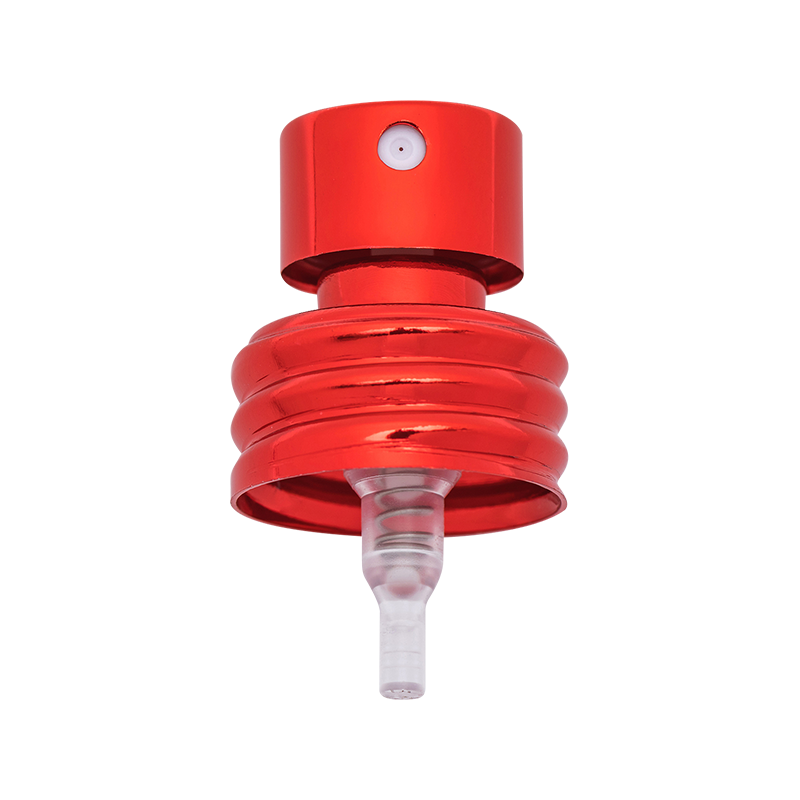
The 13/415 perfume pump —referring to the standard neck finish diameter ($13\text{mm}$) and thread depth—is the backbone of modern fragrance packaging. For fragrance brands and B2B buyers, the pump's performance is intrinsically linked to product quality and consumer safety. The engineering challenge is complex: the pump must not only deliver a precise dose but also function as a hermetic seal, preventing the highly volatile alcohol and precious fragrance oils from escaping during long-term storage and extreme conditions, such as the low-pressure environment encountered during air transportation. Zhangjiagang XinYe Chemical Sprayer Co., Ltd., founded in 2006, operates across three production bases, utilizing a complete production chain from aluminium stamping and injection moulding to automated assembly and full-auto inspection equipment. Our commitment—"ensuring quality for survival"—is demonstrated through our rigorous adherence to technical excellence, enabling us to provide globally renowned sprinkler heads and secure ISO9001-2008 quality system certification.

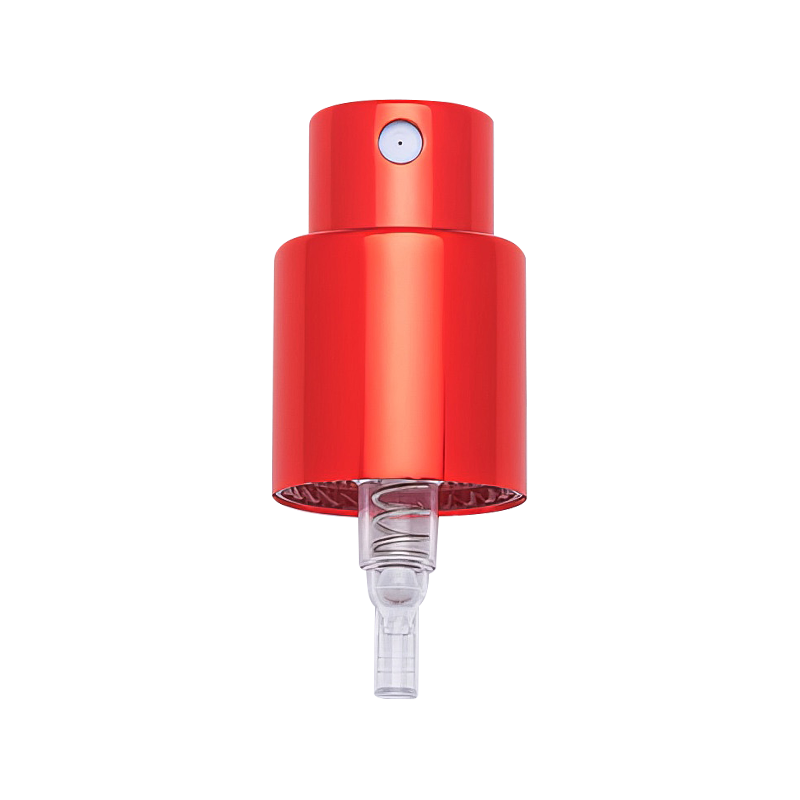
XY-LK-13/415 13mm Śrubowy rozpylacz z drobną mgiełką do perfum
The primary internal sealing component of the 13/415 perfume pump is the gasket (or valve seal). Jego funkcja jest podwójna: zapobiega wyciekom płynnych perfum i działa jako bariera paroszczelna zapobiegająca parowaniu alkoholu. Wymaga to zaawansowanego doboru materiału uszczelki pod kątem zatrzymywania alkoholu zapachowego.
The gasket material must exhibit low permeability to ethanol and essential oils, and demonstrate long-term chemical compatibility (i.e., no swelling or degradation) with the fragrance formula. Materiały takie jak NBR (kauczuk nitrylowo-butadienowy) lub standardowy PE są często nieodpowiednie ze względu na duże pęcznienie alkoholu lub przepuszczalność. The effectiveness of the material is quantified by its Permeability Coefficient ($P$), which is the product of the Diffusion Coefficient ($D$) and the Solubility Coefficient ($S$). Pożądany jest niższy $P$.
| Typ materiału uszczelki | Struktura pierwotna | Przepuszczalność alkoholu (względna) | Właściwość paroizolacji przydatności uszczelki pompy perfum |
|---|---|---|---|
| Buna-N/NBR (standardowy nitryl) | Standardowy elastomer | Wysoki; skłonny do pęcznienia/degradacji. | Ogólnie słabe w przypadku wysokich stężeń alkoholu. |
| Kauczuk Butylowy / Kompozyt | Polimer/laminat o dużej gęstości | Bardzo niski; wysoka odporność chemiczna. | Doskonały ze względu na niskie współczynniki dyfuzji; krytyczne dla długiego okresu przydatności do spożycia. |
The appropriate material provides the required vapor barrier property of perfume pump gasket, which is essential for preserving the product's quality over its guaranteed shelf life.
Uzyskanie skutecznego uszczelnienia wymaga precyzyjnej kontroli geometrii elementu i siły przyłożonej podczas montażu. W pompie perfum 13/415 uszczelka głównego zaworu opiera się na kontrolowanym ściskaniu, które musi utrzymywać nacisk kontaktowy przez lata. Over-compression can permanently deform the material, leading to stress relaxation and eventual seal failure, while under-compression causes immediate leakage. Nasz zautomatyzowany sprzęt montażowy zapewnia, że siły ściskające mieszczą się w ścisłych tolerancjach technicznych.
Drugim krytycznym punktem uszczelniającym jest połączenie pomiędzy szyjką pompki a wykończeniem butelki. Może to być połączenie śrubowe lub połączenie zaciskane.
The 13/415 pump thread design leak prevention relies on the mating of the cap's internal seal (often a polyethylene cone or disc) against the top edge of the glass bottle neck. A crimp connection, utilized in many high-end fragrances, achieves a more durable, permanent seal through mechanical deformation of the aluminium ferrule.
| Metoda połączenia | Mechanizm integralności pieczęci | Możliwość ponownego zamknięcia/odporność na manipulacje | Konieczność protokołu weryfikacji integralności zagniatania opryskiwacza |
|---|---|---|---|
| Śruba (gwintowana) | Docisk uszczelki do krawędzi butelki. | Możliwość ponownego zamknięcia (umożliwia otwieranie/zamykanie). | Low (focus on torque/gasket compression). |
| Zaciskanie (zatrzask/blokada mechaniczna) | Trwałe, mechaniczne uszczelnienie aluminiowej tulejki na szkle. | Nie nadające się do ponownego zamknięcia (wysoka odporność na manipulacje). | Wysoki; wymaga badania wytrzymałości na odrywanie i szczelności. |
For crimp seals, the sprayer crimp integrity verification protocol (including pull-off force testing and bubble testing) is paramount to confirm the seal's resistance to mechanical failure and internal pressure.
During air freight, the internal pressure of a sealed perfume bottle exceeds the reduced external atmospheric pressure. The pump's entire structure—including the valve seal and the crimp/thread interface—must withstand this pressure differential without the seal yielding, which would result in either bulk liquid leakage or excessive vapor loss. Kluczową rolę odgrywa tutaj integralność strukturalna zapewniana przez zabezpieczenie przed wyciekami z gwintem pompy 13/415.
Norma dotycząca badania szybkości parowania w rozpylaczach perfum jest ostatecznym miernikiem gwarantującym trwałość produktu. It moves beyond simple leak testing to quantify the cumulative loss of product mass due to alcohol permeation through the gasket and micro-leakage points while the pump is in the closed position.
Testy grawimetryczne to standardowa metoda kontroli jakości B2B:
Maksymalna dopuszczalna utrata masy spowodowana parowaniem jest zwykle określana jako $<0,1\%$ do <0,5%$ całkowitej objętości rocznie. Any loss exceeding this indicates a failure in the vapor barrier property of perfume pump gasket or the primary seal, requiring re-evaluation of the pump design or material selection.
Wydajność pompy perfumowej 13/415 jest efektem zaawansowanej inżynierii materiałowej i precyzji zautomatyzowanej produkcji. From the selection of low-permeability materials for gasket material selection for fragrance alcohol retention to the rigorous sprayer crimp integrity verification protocol, every step ensures that the product meets the demands of global logistics and extended shelf life. Zhangjiagang XinYe Chemical Sprayer Co., Ltd., leveraging our integrated production chain and automated inspection equipment, is committed to providing robust, compliant, and globally renowned perfume sprayer heads that adhere to the strictest perfume sprayer evaporation rate testing standard.
Tel: +86-13812990918
Phone: +86-512-58962260
Address: Nr 3, Xiangqun Road, Leyu, Zhangjiagang.